
Is Digital Marketing Dying or Evolving? The Reality Behind the Hype
Have you ever thought about whether Digital Marketing, once called the future of advertising, is becoming irrelevant itself? As we navigate through this ever-changing world filled with an unending stream of new trends, digital marketing can be confusing because it seems like every year, someone new idea has been produced as the ‘next big thing.’ If we are not careful, we could spend all our time worrying if we should keep using our old methods of advertising. Is digital marketing in its resurrection period, or are we just evolving into something different?
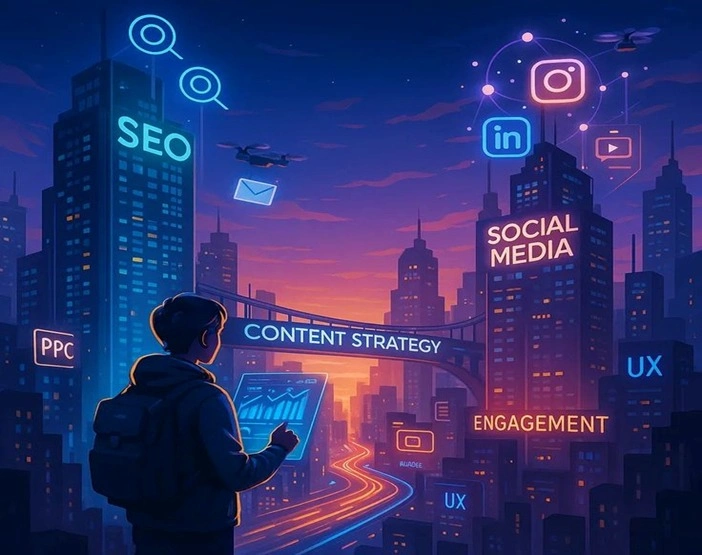

1. The Evolution of Digital Marketing: Not Dying, Just Changing
Even twenty years back, digital marketing was already changing itself. It started with simple email campaigns and some banner ads, and not long ago, it entered an explosive phase in social media and influencer marketing. But digital marketing has given itself a chance and come out stronger than ever, changing all the time to meet challenges head-on.
- AI Integration: Marketing has undergone a redesign in how it works with digital marketing with the advent of AI. Now, AI is used for much more than automation and is considered an instrument for achieving a personalised user experience through conversation by machine learning or predictive analysis. In fact, the majority of marketers, that is, 63%, use artificial intelligence around 2023 in some way to analyse customer data, segment customers, and optimise their campaigns. Consistent with furnishing every individual with the most appropriate content, AI-powered tools predict consumer behaviours and ideally create that personalised marketing experience.
- Voice Search and Smart Devices: Voice search is changing SEO, but so are smart devices. The voice assistants that are currently more popular than humans (4.2 billion in use), around 55% of households expect voice enablement. Voice queries are identified separately from typed queries, often leading companies to have to take a strategic rethinking around them to optimise the content. Voice search indicates that digital marketing is improving with technology in marketing. The gap does not replace but improves the user experience in digital marketing.
- Mobile-first Marketing: Given that mobile traffic accounts for more than 54% of the global web traffic in 2023, mobile marketing could now become a must-have for digital strategies. Brands are working hard to adapt their content to make it mobile friendly-cum-mobile-first so that their load times will be faster, and their emails will reach a mobile-friendly configuration while having user-friendly interfaces.
2. Real-Life Case Studies: Digital Marketing in Action
Let’s explore some real-world examples where digital marketing has evolved and thrived.
- NIKE’s Digital Commerce Awakening: Nike, one of the global giants in sportswear, has since been in the top elite on the digital marketing bellwether in with the default price of its digital impression. Cybernetically, since it covertly apprehended digital transmission, where it has been overtly set fronting of digitalising internet cyber commerce, the company rep1 cased a 30% increase in online sales. The transition at Nike, towards the application of AI and big data for facilitating personalised shopping and user experiences, serves as a perfect case for probing into the evolution of digital marketing. By personalised content and responsive distributions of ads utilising the preferences and behaviour of its customers, it has solidified its online presence and weathered the vicissitudes of going nearly uncharted in a marketplace subject to change at breakneck speed.
- Broadly, the Response of Facebook to Privacy Rules: Facebook criticism grew more valid since privacy became a matter of immense subject in the light of the General Data Protection Regulation (GDPR). So as to lessen further public ire, Facebook is starting to adopt advertisement strategies that are considered less private and absolutely require clear consent from users in one context or another. Such modifications also show how large social media behold all need to turn their digital marketing strategy in contemplation of a change in privacy standards. By no means has GDPR been a game-changer in relation to Facebook’s digital marketing capabilities; on the contrary, it is about doing a bit more ethical and transparent work.
3. The Hype Around Digital Marketing “Dying”
With the integration of digital marketing technologies and an increased reliance upon digital marketing, many people argue that digital marketing is reaching its limits for numerous reasons. Critics speculate that digital marketing became ineffective due to oversaturation, new privacy regulations, and alterations by social media platforms. These limitations might portray a select aspect of digital marketing of relevance in this very moment.
- Saturation and Information Overload: Owing to the huge amount of information on the web today, the task of marketing becomes more difficult, thereby making it harder for marketers to capture consumer attention. The struggle for visibility is an even more significant issue as millions of brands are chasing the same audience. The good news here is that it inspired creative innovation in marketing, which led toward the production of high-quality, personal, engaging content relevant to the target segment.
- Regulations and Privacy: Data privacy concerns are rising thanks to legislation like GDPR and customers’ increasingly watchful gaze, making it mandatory for marketers to be absolutely open when it comes to collecting data. It has been chaotic, but watching this evolution has certainly emphasised the self-regulation and self-responsibility of digital marketers. Marketing then revolves around soliciting trust by taking customers’ privacy into account and by working with more open data-collection tactics. This turn indeed means digital marketing will live, and meanwhile, it will only be for the good.

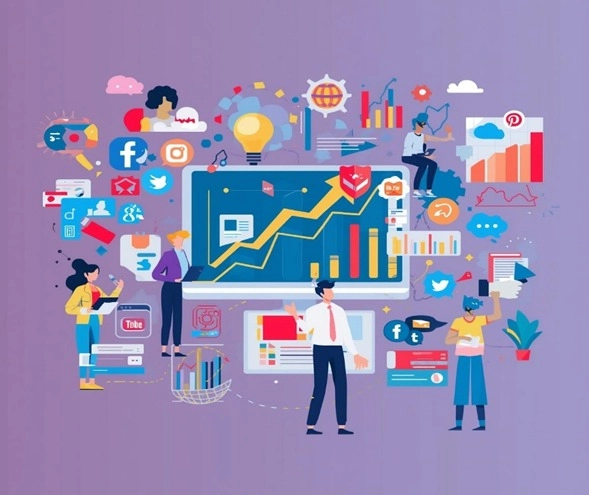
4. The Future of Digital Marketing: What’s Next?
Digital marketing moving forward appears even brighter than you could have imagined. Digital marketing keeps evolving and expanding through new technologies and strategies coming up in front of our very eyes.
- Interactive Content: Many marketers believe that interactivity can greatly enhance interaction. Nowadays, this discourse suggests that consumers will not accept passive information transmission; rather, they crave information through engagement. Marketing campaigns today are full of tools such as quizzes, polls or interactive videos. The transition toward interactive content is what offers an engagement-driven path that makes the personalisation of experiences possible for users, and signifies yet another evolution of the domain of digital marketing.
- Augmented Reality (AR) and Virtual Reality (VR): Even now, companies such as IKEA are already using AR to allow their customers to visualise how furniture would fit in their homes. The progress in the accessibility of technologies as AR and VR, will see a rise in the number of brands that adopt them for promotional purposes. Immersive strategies can help the brand engage the consumer beyond the normal guidelines of digital marketing.
- The Significance of Sustainability and Ethically Conscious Marketing: Being conscious of various environmental and social causes, sustainability will now become one of the sidelines of digital marketing. Consumer trust and brand loyalty come automatically to a brand that stands for good social stewardship, sustainable strategies, and a good moral code.
Conclusion
Is digital marketing dying or transforming instead? It is definitely transforming. In the contemporary world, the future of Digital Marketing will adapt to the consumer and business needs; hence, the future holds not dismay but a sheer transformation and sophistication as well as efficiency. Whilst there exist certain challenges, the different facets of data privacy, saturation, and changes in algorithms drive forth creative, innovative ways to place digital marketing at new altitudes.
And for those advertisers reading this, the only strategy to take is to remain well-informed and adaptive. This could be achieved by familiarising oneself with the emerging technologies and applied ethical marketing practices. When they do make the thought, enterprises may remain on the cutting edge of this rather exciting bunch. Yet the truth remains: Digital marketing has a place on our planet, and it is metamorphosing even in ways we could hardly have imagined.
Good one
How are you
Nice one
Nice
Interesting
Wow
This highlights an important shift. Digital marketing is not in decline but in continuous evolution, driven by technology, data, and changing consumer behaviour rather than hype-driven trends.
Interesting
Nice❤️❤️
Marvelous
Nice work and All the best wishes for your future
Your generosity and thoughtfulness are deeply appreciated.